26.03.2026
- News & Press Releases
- Impact Stories
Building markets: What three exits taught us about responsible investment

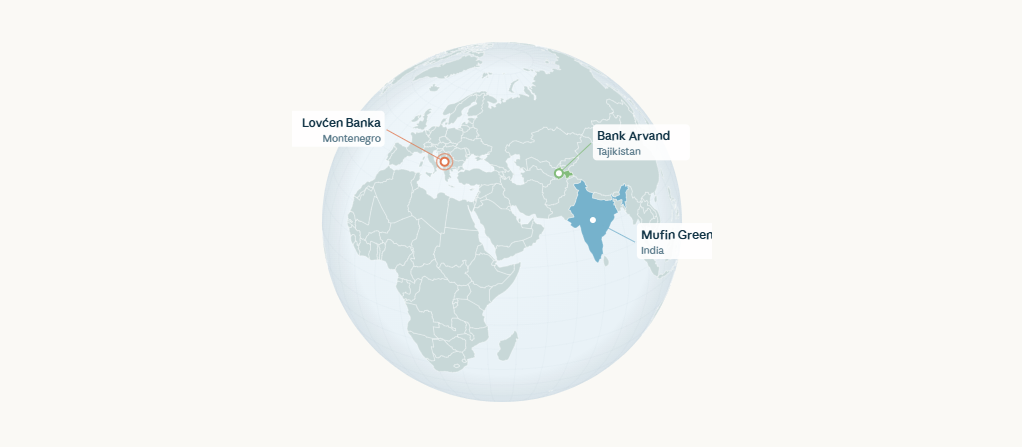
A development organisation in Tajikistan that became a bank. A climate-finance company in India that pivoted its business model. A microfinance lender in Montenegro that changed hands during COVID. Three exits, three different stories – and a shared question: did the impact last?
Shonan Kothari spoke to investment managers Jan Dewijngaert and Ritesh Modi to find out.
The exit as proof point
The entry into an investment is a statement of intent. The exit is where that intent meets reality. Did the institution grow? Did the people it was set up to serve continue to be served? Did the next owner care about the mission, or only the margin?
At Incofin, the exit process is governed by a Fitness and Compatibility Review – a structured screening of potential buyers across dimensions including their social responsibility profile, commitment to maintaining the investee’s social mission, corporate culture, and capacity to provide non-financial support. The framework was developed in-house and has been applied across exits from multiple Incofin funds. It is not a formality. In the exits described below, the choice of buyer shaped the outcome.
For each of the three exits profiled here, we sat down with the investment managers who managed them and asked what worked, what didn’t, and what we’d do differently.

Bank Arvand – Tajikistan
Fund: Rural Impulse Fund II (RIF II) | Entry: May 2014 | Exit: December 2024 – September 2025
The investment
Incofin entered Bank Arvand in May 2014 through Rural Impulse Fund II, acquiring an 18% equity stake alongside Triodos. At the time, Arvand was not yet a bank. It was a development organisation that had evolved into a microfinance institution, serving around 34,000 clients from its base in Dushanbe and the Sughd region of Tajikistan. The investment aimed to support Arvand’s expansion into rural areas and diversify its product offering.
Over eleven years, the transformation was substantial. Arvand obtained a full banking licence in 2019 after acquiring another bank. By December 2024, Bank Arvand served over 317,000 clients through approximately 70 service points staffed by 900 professionals. Its gross loan portfolio had grown to USD 115 million. It had developed mobile banking, internet banking, and begun exploring blockchain – a digitalization journey that barely existed at entry.
Impact: achieved and sustained
The impact mission held. Arvand’s philosophy was always to reach people the formal financial system was not designed to serve. To a large extent, that did not change when the organisation became a bank. The data tells the story of consistent focus with growing outreach.
The bank is focused on female entrepreneurship and empowerment. At entry in 2014, 42% of clients were women and 58% were rural. By 2024, female clients had risen slightly to 46%, while rural clients had grown significantly to 68%. The average loan remained small – roughly EUR 1,900 in 2024, which, adjusted for a decade of inflation, represents broadly the same segment as the EUR 1,000 average at entry. The number of clients more than tripled. This is a country where less than half the adult population has a formal financial account.
Arvand also became a pioneer in green finance in Tajikistan, dedicating 10% of its loan portfolio to green lending and setting a target to reach 30% by 2027. Products included eco-smart agri loans, energy-efficient housing loans, and leasing of energy-efficient equipment. In 2024, the bank ranked in the top three of all 32 Asian financial service providers surveyed in the 60 Decibels Microfinance Index – a recognition grounded in client voice rather than institutional self-reporting.
The exit
When Rural Impulse Fund II entered liquidation around 2023, Incofin began the process of selling all remaining portfolio companies. In Arvand’s case, the timing was complicated. Tajikistan’s economy depends heavily on remittances – roughly 40% of GDP comes from Tajiks working abroad, primarily in Russia. The Ukraine conflict in 2022 disrupted remittance channels as Russian banks faced sanctions, creating uncertainty for Arvand’s clients and, by extension, for any potential buyer.
Incofin introduced an investment advisor and drove the sale process among the shareholder group. The process ultimately led to Gojo & Company of Japan, which already owned and operated HUMO, another financial institution in Tajikistan. Gojo acquired shares from all selling shareholders. Incofin and Triodos sold in two tranches: a first in December 2024, and a final tranche in September 2025 after Gojo received central bank approval for full ownership. Access Microfinance Holding and Frontiers, the founding shareholder (owned by American NGO ACDI/VOCA) exited in the final tranche.
Gojo’s stated intention is to eventually merge Bank Arvand with HUMO, creating a larger institution with complementary geographic coverage across different regions of Tajikistan. For Incofin, this is exactly the kind of outcome the Fitness and Compatibility Review is designed to identify: a mission-aligned buyer with operational experience in the same market and a long-term institutional commitment to financial inclusion.
Financially, the exit returned 3.5 times invested capital over eleven years – a strong result for an investment in Central Asia that navigated currency devaluations, the Afghan crisis, and the fallout from the war in Ukraine.
Lessons
Bank Arvand is the clearest success of the three exits. The institution Incofin left was fundamentally stronger than the one it entered: a regulated bank rather than a microfinance organisation, with a loan portfolio five times larger, a green finance strategy, a strong focus on female entrepreneurs, and international recognition for client outcomes. What made this possible was leadership. Arvand’s management, under CEO Shoira Sadykova, proved receptive to governance strengthening while maintaining its own operational identity. The board functioned exceptionally well – investment manager Jan Dewijngaert describes it as one of the best he has served on at Incofin.
The lesson for future exits: in difficult geographies, the quality of the board and the patience to wait for the right buyer matter more than timing the market. Incofin could have sold earlier, or to a less aligned buyer. Instead, it drove the process and held until a mission-compatible acquirer emerged – even as currency crises, the Afghan situation, and the Ukraine war kept shifting the landscape.

Mufin Green Finance – India
Fund: India Progress Fund I (IPF I) | Entry: September 2022 | Exit: Partial exit, 2025
The investment
Incofin invested approximately INR 45 crore (c. USD 5.7 million) in Mufin Green Finance through a Series A preferential share issuance. Mufin was – at entry – India’s first listed NBFC dedicated entirely to electric vehicle financing. It provided loans for e-rickshaws, electric two- and three-wheelers, four-wheelers, charging stations, and batteries, having financed EVs worth over INR 160 crore (c. USD 17.4 million) across nine Indian states.
The thesis combined climate impact with financial inclusion. Some 84% of Mufin’s borrowers were new-to-credit: people with no prior formal credit history. These were e-rickshaw drivers, small-scale transport operators, and micro-entrepreneurs for whom an electric vehicle was both a livelihood tool and, often, their first formal financial relationship.
Impact: achieved, sustained, and challenged
On financial inclusion, the objective was both achieved and sustained. Every Mufin borrower fits the profile of someone not served by formal credit channels. That was true at entry and remained true at exit.
The scale of that inclusion grew significantly during the investment period. Mufin’s active borrowers increased roughly sevenfold, from around 22,000 in 2023 to 159,000 today. Some 92% are in Tier II and smaller locations, and a large share are first-time credit users – indicating deep financial inclusion rather than refinancing of existing borrowers. The portfolio is predominantly income-generating assets: e-rickshaws, electric two- and three-wheelers that directly support livelihoods and micro-enterprise activity.
The climate thesis, however, was challenged. India’s e-mobility financing sector faced headwinds: oversupply of electric vehicles disrupted the market, and government subsidies that had supported adoption were reduced or withdrawn. Mufin’s EV financing activity continues to generate meaningful climate impact – estimated carbon savings reached approximately 78,000 tonnes in 2024 and are projected to exceed 130,000 tonnes in 2026. But the company has also broadened its model significantly. It has diversified into insurance premium financing, where it helps families who cannot afford upfront premiums split payments into monthly instalments. Through integrated technology with established insurance companies, Mufin is improving access to health insurance for underserved households.
Insurance penetration in India is significantly lower than credit penetration, and helping families access coverage they cannot otherwise afford is meaningful social impact. But it represents an evolution from the original thesis. Mufin is no longer a pure-play green financing company. The financial inclusion thesis has strengthened – the company now provides access to both EV credit and insurance for the underserved – but the climate thesis was diluted.
The exit
Incofin executed a calibrated partial exit at a significant premium to its entry price. Because Mufin was already listed on the BSE when we invested, the exit required navigating compliance and disclosure requirements for insider transactions. The team ensured strict compliance throughout, reinforcing governance standards consistent with our investment philosophy.
The partial exit generated a strong 5x multiple on invested capital in under three years – one of the fastest value realisations in Incofin’s portfolio to date. Importantly, the exit was partial, noted investment manager Ritesh Modi. The fund retains significant exposure to the company’s continued evolution, reflecting confidence in the financial inclusion thesis while acknowledging the broader strategic shift. The incoming investors – retail and institutional – chose Mufin in part because of its impact and sustainability profile, further validating the case that impact-oriented business models attract capital from the mainstream.
Lessons
The Mufin experience surfaced several insights. Listed investments offer exit liquidity that private markets cannot match, but they also come with volatility. Strong board oversight and a promoter receptive to feedback improved both impact delivery and valuation. Impact can evolve: expansion into multiple products, though not part of the original thesis, ultimately de-risked the portfolio and supported a premium exit. And companies in niche sectors with a climate angle attract buyer interest and command premiums, even as their models evolve.
Perhaps the most important lesson is about thesis discipline. A company can pivot for sound commercial reasons and still move away from the impact thesis an investor backed. Recognising that tension is what makes exit analysis useful for future decision-making.

Lovćen Banka – Montenegro
Fund: Incofin Microfinance Fund (IMF) | Entry: November 2020 | Exit: February 2026
The investment
Incofin invested in Lovćen Banka in November 2020, converting a loan into equity and subsequently participating in two capital increases. The timing of the entry was postponed because of the pandemic. Montenegro’s economy depends heavily on tourism and was seriously impacted by COVID-19. Hotels, restaurants, and small businesses – many of them Lovćen clients – had shut their doors for most of 2020. While fully understanding the increased risk profile of the bank as its portfolio was under severe stress, Incofin nonetheless chose to convert its loan into equity, albeit at a revised valuation. This decision was taken with a clear goal to support the bank in difficult times.
Lovcen Banka was the first microfinance institution in Montenegro, which transformed into a bank in 2014. When Incofin invested, the bank still had a microfinance orientation with the founder, Alexandra Popovic, serving as Chair of the Supervisory Board.
Impact: a more complicated picture
Shortly after Incofin’s entry, changes in the ownership shifted the bank’s direction. Zetagradnja DOO, a leading Montenegrin real estate development company and existing shareholder, progressively took a large minority stake. The founding management and Chairperson of the Supervisory Board stepped back, and the bank’s orientation gradually moved away from microfinance towards commercial banking. On the impact dimension, this is probably the most nuanced of the three exits.
One of the contributions by Incofin was technical assistance for digitalization. When we entered, the bank had virtually no digital infrastructure. By the time of exit, Lovćen had mobile banking, internet banking, and a digital strategy that Incofin’s TA had helped develop.
And there is also a broader principle worth acknowledging. When international investors build up an institution and local investors take over the helm, that transfer of ownership is itself a form of market building. Mobilisation of local capital to sustain a financial institution that was built with international support is a meaningful outcome.
The exit
The exit was completed alongside DEG, the German development finance institution, and a group of local investors around the founder, Aleksandra Popovic. Zetagradnja acquired IMF’s stake and now holds a large majority alongside SIDT, a member of Germany’s Sparkassen Group. Financially, the investment generated an attractive return for the fund – a meaningful result given that IMF entered at the height of the pandemic, when Montenegro’s tourism-dependent economy faced significant challenges and the bank’s portfolio was under severe stress.
Lessons
Lovćen is a reminder that impact outcomes are never fully within the investor’s control. Incofin entered a bank with a clear microfinance thesis, supported the bank through a pandemic, and contributed meaningful technical assistance. But a change in controlling ownership shifted the institution in a different direction.
The lesson is structural: in equity investments where Incofin does not hold a controlling stake, the alignment of co-shareholders on mission matters as much as the quality of the investee itself. When majority control shifts to a shareholder with a different vision, the impact thesis can erode even if the financial thesis holds. This is the time to consider an exit. It is largely thanks to having carefully carved out several exit routes at the time of structuring the investment, that this exit was both very smooth and successful.
What we take forward
These three exits tell different stories, but they share a common thread: the exit is where the quality of the investment relationship is tested. In Tajikistan, a decade of patient engagement produced an institution that outgrew its origins and was handed to a buyer with a clear plan to extend the mission. In India, a bold climate thesis met market headwinds, and the company adapted – preserving its role in financial inclusion but diluting the green mandate that had defined the original investment. In Montenegro, a pandemic-era commitment delivered a financial return, while a shift in ownership broadened the bank’s mandate beyond its original microfinance focus.
Across all three, the Fitness and Compatibility Review proved its value – most clearly in Bank Arvand, where the screening helped identify a buyer whose own portfolio and strategy were aligned with Arvand’s mission. But frameworks alone are not enough. The Lovćen experience shows that responsible exit planning must begin at entry, with careful attention to shareholder structure and control provisions. And the Mufin experience shows that impact theses can shift not through bad faith, but through market forces that push a company to adapt its model.
With two further private equity exits from the India Progress Fund I on the horizon, these lessons are not retrospective. They are shaping how Incofin approaches the next chapter of its private equity practice – building markets that endure beyond the life of any single fund.
Bank Arvand was a portfolio company of the Rural Impulse Fund II. Mufin Green Finance is a portfolio company of the India Progress Fund I. Lovćen Banka was a portfolio company of the Incofin Microfinance Fund. All funds are managed by Incofin Investment Management.

Article by Shonan Kothari, Marketing and Communications Manager, Incofin Investment Management