05.02.2026
- Impact Stories
“We don’t give money. We give assets.” How TBC Leasing helps Georgia’s entrepreneurs
This story relates to financing provided through the Global Gender-Smart Fund (GGSF) – where Incofin serves as portfolio manager – and Invest in Visions (IIV), where Incofin acts as investment adviser.

In a young financial system where commercial banking itself is only three decades old, leasing was a new concept. Today, it’s a second reflex for many Georgian businesses.
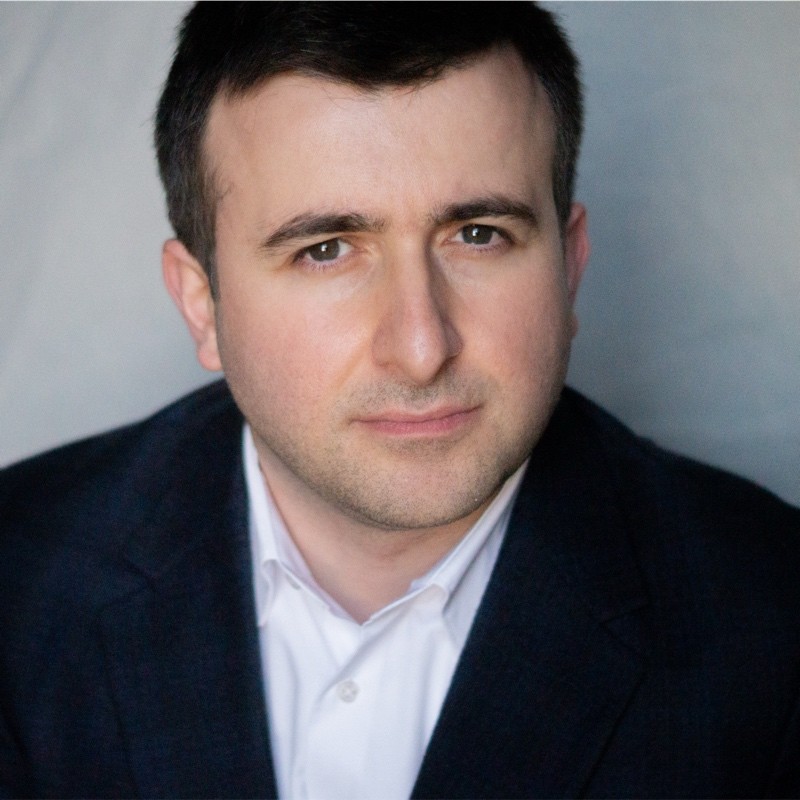
“We do not transfer money to our clients… we give them assets,” says Tornike Egnatashvili, Head of the Financial Department at JSC TBC Leasing. “That’s the main difference.”
A market that’s still at 1%
TBC Leasing and its peer, Bank of Georgia, had to build the market from scratch. Now the industry is growing at about 30% per year – yet it still represents only around 1% of Georgia’s total debt stock (roughly GEL 750 million in a GEL 70 billion system). In more developed markets, that figure reaches 5%. “There is a potential of five-fold growth,” Tornike notes.
TBC Leasing’s logic is direct: “Everything we finance is an asset, not a cost… used to produce additional goods and services.” Last year alone, the company estimates it helped create approximately 700 new jobs – tied to financed equipment like bottling lines, vehicles, chillers, and washing machines.
Small businesses generated 15.9% of Georgia’s total turnover in Q1 2025 and employed 35.5% of the workforce. Yet women remain underrepresented – only one-third of enterprises are women-owned, and fewer than 20% have a female top manager. Supporting these segments requires patient, long-term capital.


The first companion
It you’ve never borrowed formally, or have no assets to pledge, a bank can feel like a shut door.
“Most of the businesses rejected by banks for lack of collateral are our direct target group,” Tornike explains. “That’s why a significant portion of our portfolio is startups – first coffee shop, first small manufacturing line, first small farm.” The asset itself serves as security; if something goes wrong, it can be repossessed or re-leased. But the design is to get a business standing. “We position ourselves as the first companion – those first, young steps.”
TBC Leasing moves with cash flow. “We can tailor payment schedules to a client’s seasonality… ups and downs of sales,” he says. Teams coach clients on foreign exchange risk and are preparing simple hedge contracts – spot or derivative – “so we can help them hedge their currency risk.”
After a few years, once cash flows are stable and track records strong, many clients qualify for commercial bank loans, which are often cheaper. TBC Leasing sees that as a win. Clients don’t “leave” so much as graduate – coming back to lease the next specialised or green asset, while using lower-cost bank credit where it makes sense.
Reach is national: offices in Tbilisi, Batumi, Kutaisi and Rustavi keep the model hands-on in the regions.


Who shows up first
There’s a detail Tornike loves sharing. “Whenever we launch a new product – which is not even gender-oriented – the first adopters are female entrepreneurs.” Cafés, laundries, jewellery shops, small farms: women who value fast onboarding and cash-flow flexibility as much as price. “Georgia’s entrepreneurial scene is really dominated by female entrepreneurs,” he observes.
It shows internally too: 56.4% of TBC Leasing’s staff are women (110 out of 195), and 62.5% of loan officers are women. On the client side, women borrowers account for 29.7% of the portfolio (861 clients) – a strong foundation, with room to grow. Research suggests women reinvest up to 90% of their income into their families and communities, compared with 30–40% for men.
TBC Leasing is now building on what it has long seen. A Gender Action Plan – supported by GGSF – includes rolling out gender-sensitisation training for senior leadership, developing gender-segregated customer data, and designing TBC Leasing’s first female-oriented leasing product.
Greening the capex base
Three to four years ago, the “green” share of the portfolio was zero. Now it sits at around 10%, helped early by EU4Energy cashback incentives and a GGF grant programme for solar. The company issued a local green bond in 2023.
“We finance rooftop solar, small hydro power plants up to 5 MW, electric vehicles and hybrids, efficient agriculture machinery, cooling systems – we classify green assets against IFC and EBRD lists with a dedicated team, software, and external consultants,” Tornike says.
Deal examples he’s proud of:
- A well-known wine resort – TBC financed the bottling/assembly line and rooftop solar that powers both the plant and the resort.
- A 100-electric-vehicle fleet (American and South Korean makes) to accelerate clean mobility.

Digital steps
Part of the strategy is to match bank-like convenience without losing leasing’s edge on speed and cash-flow fit.
A new online client portal – an “internet-bank-type” personal room – lets clients apply, check balances, and send documents to relationship managers directly. The conversations stay human; the administration gets faster.

The investor link
“Our partnership with Incofin started during COVID – it was invaluable,” Tornike recalls. “Incofin provided exactly what we needed, on time… they always considered our situation.” Beyond capital, he values knowledge-sharing with other Incofin investees: how they design products, what KPIs they track, what they learned the hard way.
Two capital partners sit behind that relationship:
The Global Gender-Smart Fund (GGSF), where Incofin serves as portfolio manager, leans into exactly what Tornike is seeing: women as first adopters and the chance to shape women-SME products that fit how founders actually build. GGSF’s long-tenor funding also helps diversify TBC Leasing’s liability structure, providing predictable liquidity against rising demand and enabling more stable, flexible leasing terms for smaller borrowers.
Invest in Visions (IIV), where Incofin serves as investment adviser, backs the broader market-building thesis: that Georgia’s leasing sector can grow from 1% to 5% of total debt, and that the jobs and green assets financed along the way matter as much as the returns.

What the next decade could look like
Tornike’s big picture is simple. Georgia is laying tracks – roads, rails, ports – and compounding skills. “All these parameters will attract investment… leasing is directly tied to GDP,” he says.
And back to that opening line: “We give assets.” In a system learning to grow by making things, it’s a good place to start.
By the numbers
- ~1% share of Georgia’s total debt that is leasing today; runway to ~5%.
- ~700 jobs created via financed assets (last year, TBC estimate).
- USD 245.8m TBC Leasing portfolio
- 56.4% staff who are women (110 out of 195)
- 62.5% loan officers who are women
- 29.7% women borrowers (861 clients)
- ~10% green portfolio share (from zero in ~3–4 years)

Interview by Shonan Kothari, Marketing and Communications Manager, Incofin Investment Management