26.06.2026
- Events
More than a cup of coffee: financing resilience across the value chain

Coffee changes hands around ten times between the farmer who grows it and the person who drinks it. At each of those steps, someone else makes the pricing decisions. That distance, between the work and the reward, was the starting point for an evening that Incofin, the Fair Trade Access Fund and BIO co-hosted in Brussels on 24 June, ahead of World of Coffee Brussels.
The theme was a simple question with a complicated answer: what kind of capital does it take to build resilience for smallholder coffee farmers? The room brought together the people best placed to answer it, with development finance investors, partners from across the value chain, and coffee producers themselves.
The capital producers actually need
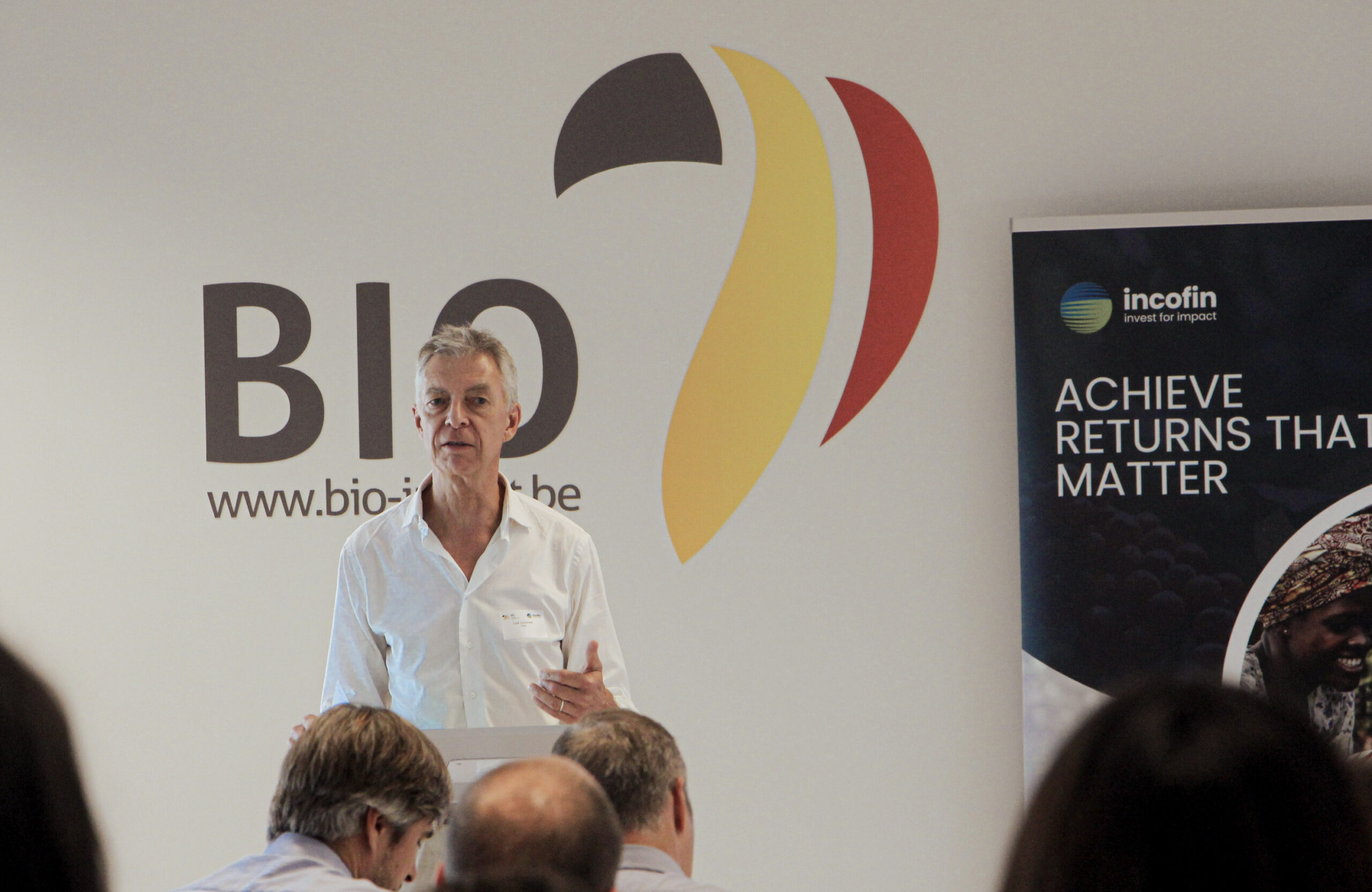
Luuk Zonneveld, Chair of the Fair Trade Access Fund, set out the economics. Producers need three distinct kinds of money, each with its own rhythm. Working capital that is available during the short windows of harvest and trade, so that farmers are not paying interest year-round on money they only need for part of it. Trade finance that bridges the gap between handing over the coffee and receiving final payment, which for a cooperative can take months. And investment capital for renovating plantations, replacing trees and building processing facilities, where the wait between spending and return can run to three or five years.
Most of that money, he noted, comes from closer to home than the development sector tends to assume, from local lenders, family, diaspora remittances, local banks and a growing set of domestic funds. Foreign capital is usually a minority share, somewhere around a quarter to a third of what a smallholder needs. It is also the most critical part, and the part worth helping producers become less dependent on over time.
The challenges that money alone does not solve
Money was only one strand of the conversation. Price volatility came up repeatedly: a coffee farmer commits to a crop with no idea what it will sell for a year later, sometimes at twice the price, sometimes at half. Layered on top are climate volatility that hits both the quality and the quantity of higher-grade coffee, compliance requirements that arrive at the farm gate from EU legislation written far away, and a persistent shortage of good information about prices, quality and local microclimates.
Hannelore Beerlandt, Head of Operations at the International Coffee Organization (ICO), widened the lens to the global picture, and her account of where power sits in the chain was sobering. Coffee farmers already sit at the weak end of the chain. Above them, the trading layer is consolidating fast: big players are buying up smaller traders, so the top five now handle roughly half the world’s green coffee, up from about 30% in 2018. That means the farmer faces fewer and bigger buyers, with even less room to negotiate. Her conclusion was that no single source of money fixes this. Private finance alone won’t, public finance alone won’t, governments and farmers alone won’t. Resilience needs them working together and holding each other to account. And the reason to act now is that coffee is genuinely scarce, which gives private buyers a real incentive to invest closer to the farms they depend on instead of leaving producers to fend for themselves.
Her conclusion was that no single actor will carry the coffee sector to resilience. Public finance, private finance, farmers and governments each have a part, and the sector works best when it holds them accountable to one another. She also pointed to how little of coffee’s own biology has been put to work: the crop has several species but only a small number of commercial varieties, where a fruit like the pear has far fewer species and more varieties.
What the Fair Trade Access Fund brings
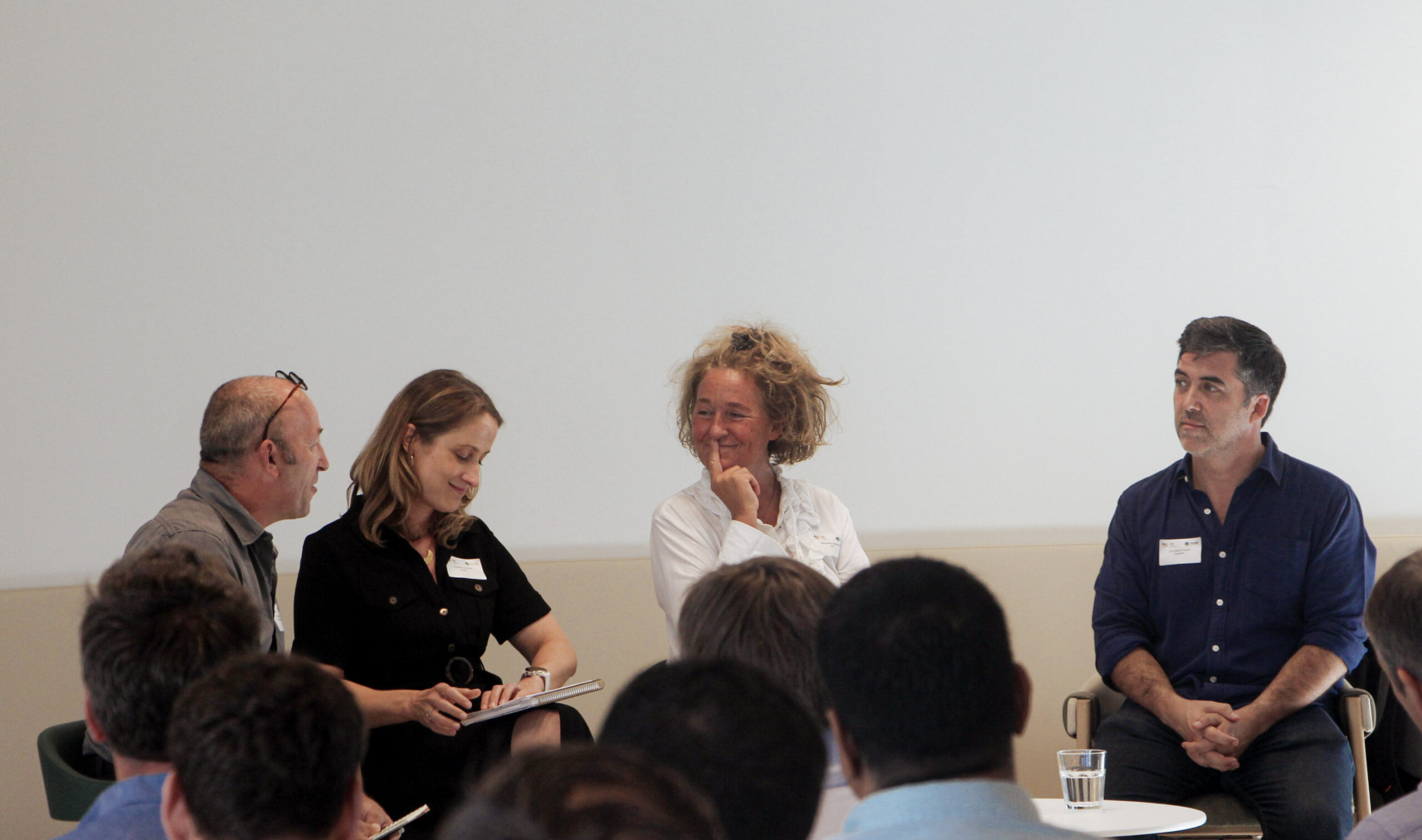
This is the gap the Fair Trade Access Fund was built to address, by financing the system around the farmer as well as the farmer. Three billion cups of coffee are consumed every day, Noémie Renier of Incofin reminded the room, and for hundreds of millions of farmers coffee is a living income rather than a luxury. She manages the fund and moderated the panel, and put the challenge plainly: resilience asks for more than funding. Since its inception, FAF has channelled USD 675 million in capital and USD 2.5 million in technical assistance to 146 enterprises across Latin America, Africa and Asia. Last year, it reached close to 545,850 smallholder farmers.
Alongside the financing sits newer work on environmental sustainability, a payment for environmental services programme developed with KfW and the German development ministry BMZ, which puts a value on the good agricultural practices farmers already carry out. The local presence in coffee regions also does quieter work that is hard to quantify, connecting producers to each other and to the services they need.
Voices from the chain
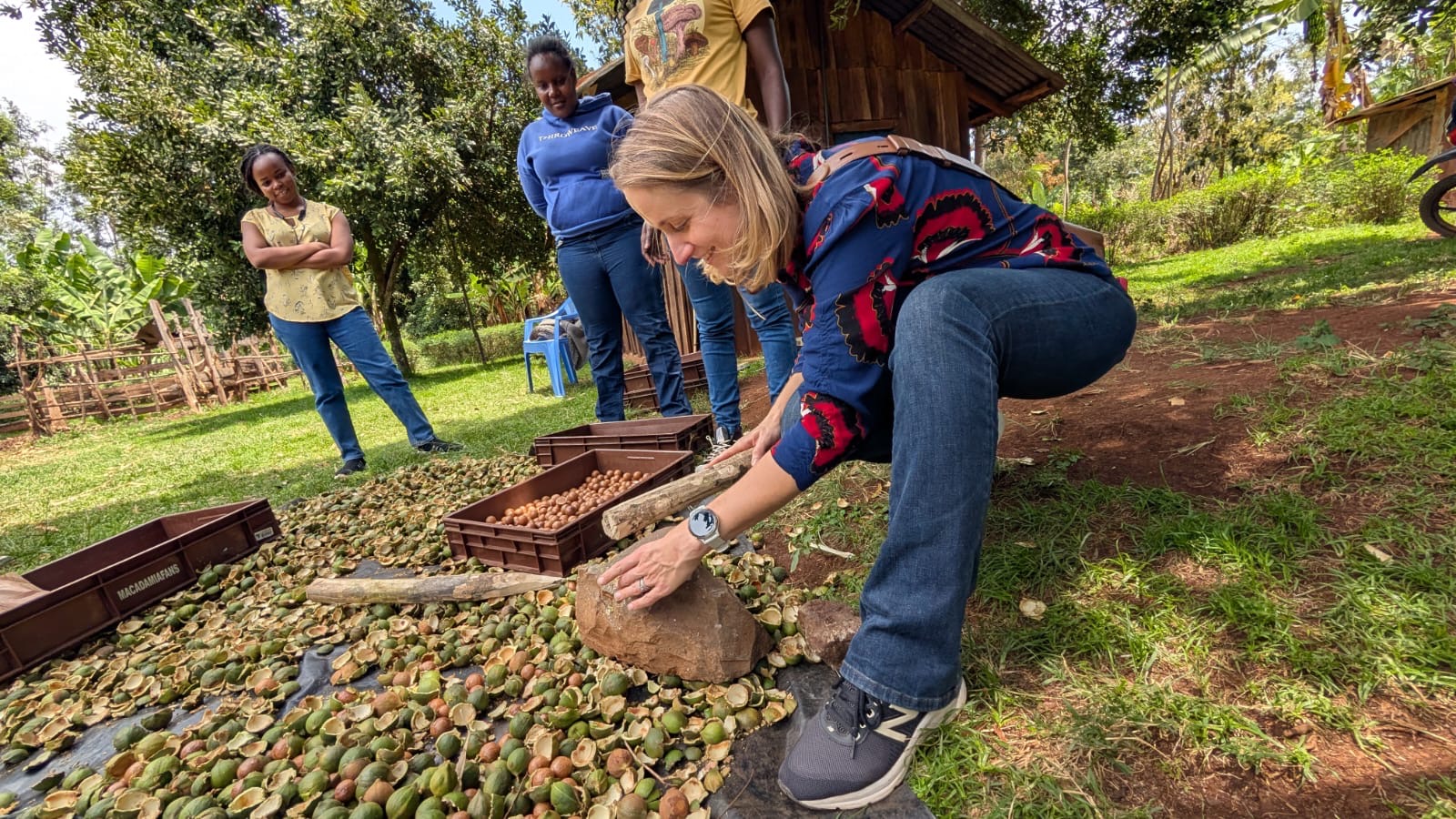
Luis Miguel García of Equation Coffee in Colombia showed what this looks like on the ground. His team turns coffee prunings into biochar that restores soil and pays farmers through carbon credits, with four clusters now underway through FAF.
Producers in the room were clear about why Fairtrade specifically matters. The premium runs two to three times higher than other certifications, García noted, and because it is paid to the cooperative as a whole and only to groups of farmers, it pushes producers to decide together how to invest it.
Philippe Weiler of Fairtrade closed the human loop. He told the story of Mr Hu Ha, a Vietnamese coffee farmer who lost his family and his home as a child during the war, planted his first coffee bushes as a teenager, and today directs a cooperative representing hundreds of families. Asked, through a phone translating Vietnamese to English, what Fairtrade had changed for him, he answered that it gave him a voice. Beyond the premium, beyond the roads and schools it helps build, what stayed with the room was that smaller, harder thing: confidence, dignity and the freedom to decide on your own future.
His point was analytical as well as personal. Across 30 years working on sustainability in palm oil, soy, and timber, Weiler said, Fairtrade is one of the few systems he has seen that builds the real costs of climate, deforestation and forced labour into the price itself, integrating the economic, social and environmental pillars from the start. The catch is reach. By his figures, only a small share of the world’s coffee is sold on Fairtrade terms, roughly one cup in twenty even in Belgium, which leaves a wide gap to close and work to do for farmers, companies, investors and regulators alike.

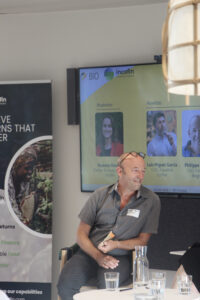
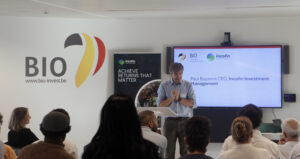
The panel kept coming back to how small the gap really is. The fair-trade premium adds something like half a euro cent to a cup of coffee, Weiler noted, a figure so small there is barely a metric for it, though across millions of kilos it becomes a real line in a company’s accounts. His argument was that companies should read this as an investment rather than a cost: in stronger farmers, in a more secure supply, and in their own reputation. A producer in the room added a point that ties certification straight back to finance. Fair-trade contracts, with their guaranteed minimum price, are often what lets a cooperative reach international lenders at all, and at better rates, because that price floor takes some of the risk out of the deal. By the panel’s own estimate, only around a fifth of the world’s coffee is grown to any sustainability standard today, so the room left with a shared task: use your voice, with consumers, supermarkets and your own organisations, to move that number.
One of those voices was in the audience. Ngoc Anh Dao founded Detech Coffee in Vietnam, set up the country’s chapter of the International Women’s Coffee Alliance, and works with Incofin to build a quality supply chain in the Sơn La region, where Detech has trained more than 1,100 farmers and helped them reach certification and finance. Her argument was that voluntary buyer choices only go so far, and that systematic change is what moves a sector. She pointed to the EU Deforestation Regulation as a game-changer that has shifted mindsets across whole villages, and described having to prepare years ahead, long before a harvest, to bring a village with her.
A shared interest
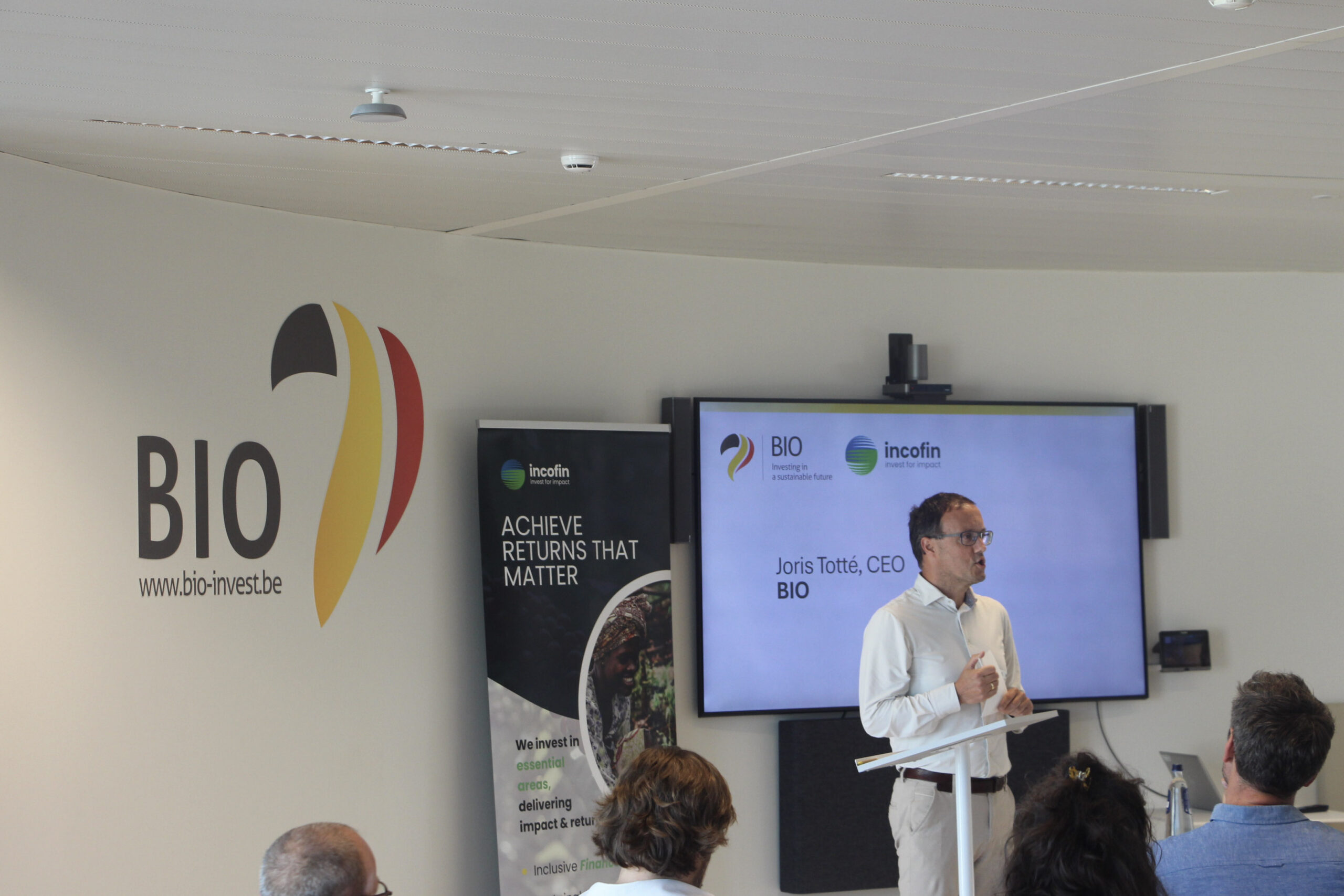
Joris Totté of BIO opened the evening with a story from his own early career, about a coffee producer named Don Jorge whom he once stayed with in Ecuador. Over the years, visitors had urged Don Jorge to switch to whatever crop was fetching a high price, and each time the price had fallen by the time he could plant it. He kept around 40% of his land in coffee throughout, because Fairtrade guaranteed him a steadier income through every swing. Coffee, he said, was what saved him.
That was the story that set the evening. Keeping smallholder farmers in the picture is a matter of shared interest as much as fairness. We do not grow coffee in Europe, and a strong, fair value chain serves everyone from the farm in the mountains to the cup in Brussels.
Andrea Alfieri of DG INTPA, European Commission, gave the closing remarks and set out where EU policy is heading. International cooperation is entering a new phase built around what he called mutually beneficial partnerships, with a stronger emphasis on mobilising public and private investment together rather than grant money alone. Coffee is an obvious candidate, given that the EU is the world’s largest consumer market for a crop it cannot grow. He pointed to coffee-specific cooperation programmes already running in 15 countries, with around 150 million euros in grants mobilised, and to the blended credit the EU is now building, including a programme in Uganda that brings together EU grants, commercial bank lending and government support into a single package designed around what farmers actually need. On the EU Deforestation Regulation, his framing was that it has become a game-changer, forcing conversations between producers, traders, roasters and authorities that had never happened before, while the EU runs programmes in 30 countries to soften its short-term burden on smallholders. He also set the stakes in human terms: in Africa, some 30 million people will enter the job market each year over the next six years, which is part of why the EU leans towards production models that create work for young people.
Guests left with bags of coffee from Fairtrade Access Fund investees and a copy of the fund’s 2025 Annual Impact Report. Our thanks to BIO for hosting, and to every speaker and producer who made the evening what it was.

Article by Shonan Kothari, Marketing and Communications Manager, Incofin