
26.02.2026
- Impact Stories
Village money for village people: Sarvodaya in Sri Lanka
*This is an investment for the Fairtrade Access Fund and the Global Gender–Smart Fund. This #Fairbruary, we spotlight a story from Sri Lanka that captures what fair finance looks like in practice.

Sixty-five years ago, a visionary leader in Sri Lanka noticed something troubling: village money was being extracted and taken to the cities for business development. Dr. A.T. Ariyaratne founded the Sarvodaya movement to reverse that flow.
‘He wanted the money to be kept in the village itself – and with that money, to give people an opportunity to do business and empower themselves,’ explains Channa de Silva, Chairperson of Sarvodaya Development Finance (SDF).
Today, the movement has a finance arm – SDF – a listed company on the Colombo Stock Exchange. 54% of its ownership originates from the Sarvodaya parent and local societies. It operates 56 branches, serves 175,000 clients, and works with over 1,200 village Sarvodaya societies across the island nation. The parent movement, Sarvodaya Shramadana, has been nominated twice for the Nobel Peace Prize and has won recognition from the Magsaysay Award to the Gandhi Peace Award.

A savings-first philosophy
Sri Lanka’s population of 23.5 million is 52% female, yet access to finance has historically been constrained by male dominance in economic decision-making. SDF’s approach begins not with lending, but with building the habit of saving.
‘We inculcate the habit of saving first – that is the starting point. We ask them to open a savings account and start saving. We speak about why family finances matter,’ says Nilantha Jayanetti, CEO of SDF. ‘Then, in our community centres, we look at what their forte is, and based on that, we nurture them into an activity. When we see their strength, we finance the venture.‘
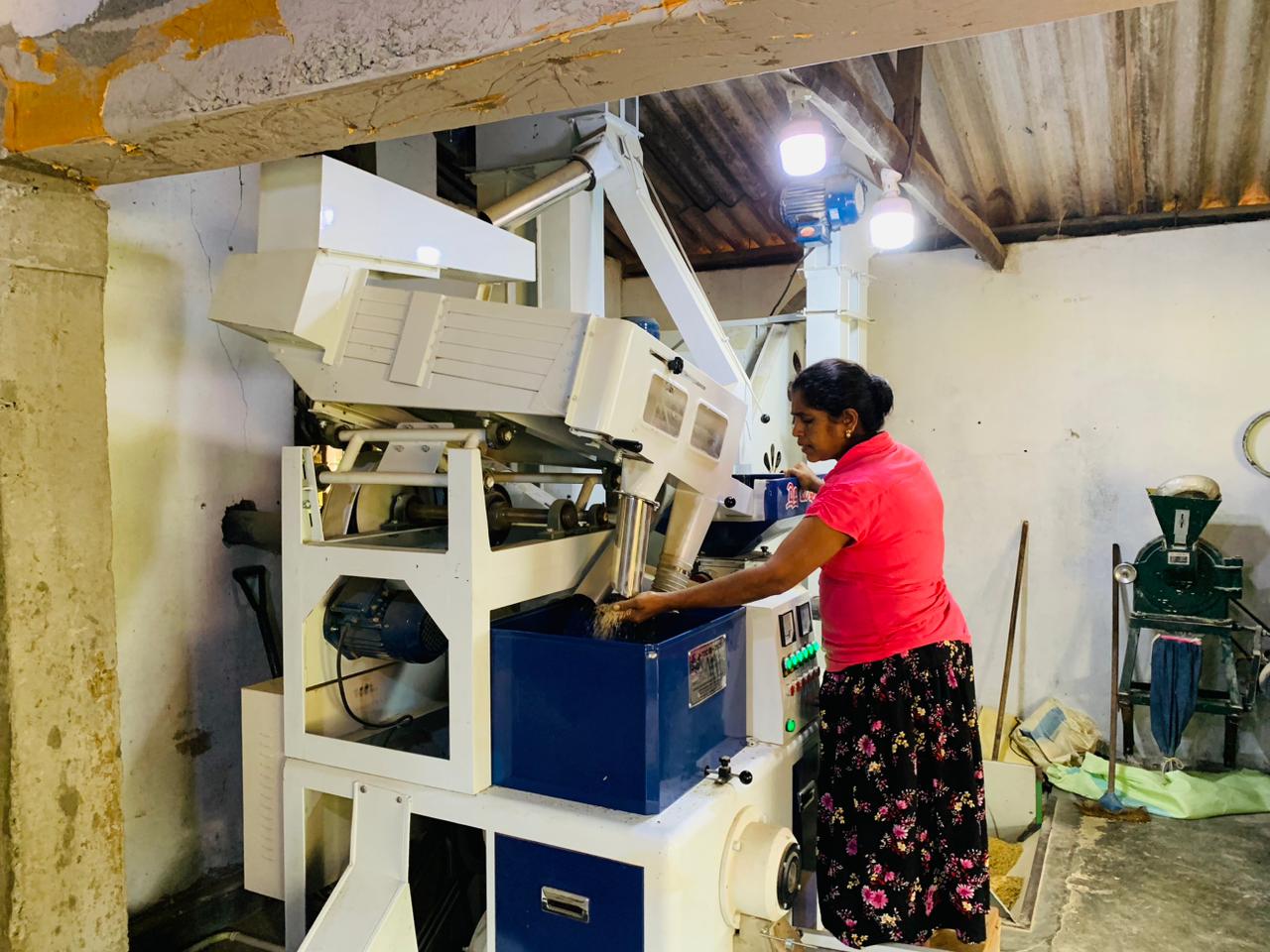
Ventures can include a variety of small businesses- shops, tailoring, food processing, light manufacturing, agriculture. It can include roles to support export industries, such as a tea-plucker, a machine operator.
This patient, developmental model traces back to the parent organization’s work through self-help groups. More than 80% of society members are women – and when SDF promotes its access-to-finance programs, women naturally form the majority.

Beyond lending: Credit Plus
SDF’s ‘Credit Plus‘ model combines finance with training, market access, and exposure. Rather than simply disbursing loans, the organization creates pathways to markets.
‘We take their products to market by conducting village business festivals,’ Nilantha explains. ‘When they showcase their products, we connect them with buyers. We provide training on packaging, developing websites, and how to showcase products on digital platforms.‘
One flagship initiative brings 150 village entrepreneurs to Colombo for a two-day carnival-style event. ‘From government officials to policymakers to business people to embassies – everyone comes and sees them,’ Channa describes. ‘We create market linkages. Suddenly, the doors open for a village entrepreneur who was totally unknown.’
The program partners with universities to deliver structured curricula – from short workshops to three-month certificate programs – covering differentiation, value addition, and market positioning.
The pumpkins that changed a market
When a bumper pumpkin harvest threatened to go to waste, SDF organized a festival to popularise pumpkins in Sri Lanka. Several hotels and venues adopted the theme of the festival. ‘Within one day, 100,000 pumpkins were sold,‘ Channa recalls. ‘The price we fetched for farmers was about 12 times more than the market price at that time.’
All proceeds from the festival went directly to farmers.
The event drew coverage from all 35 radio stations, 15 TV channels, and over 50 print outlets. Universities volunteered to train farmers on harvest scheduling. The ripple effect endures: ‘Now every year across the 12 months, pumpkin has a good, stabilized price for farmers,’ Nilantha notes.


Modernizing agriculture – eight minutes versus one day
Sri Lanka’s agriculture sector faces three challenges, according to Nilantha: traditional methods, low technology adoption, and poor value capture for inputs and outputs. SDF has partnered with European Development Financial Institutions Management Company (EDFI MC) to address these gaps through agricultural modernization.
‘When farmers collect the harvest manually, there is big wastage,’ he explains. ‘For one acre of paddy, you need to deploy at least 5 people for one day. With a combined harvester machine, it takes only eight minutes.‘
SDF has financed over 2,800 tractors and combined harvester machines, reducing labor shortages, improving efficiency, and cutting post-harvest losses. This work also addresses food security concerns: ‘Because the harvest is small, when they apply best practices, this addresses more than 20% of food security concerns.’
Natural farming comes full circle
In a twist of history, SDF leadership traveled to Andhra Pradesh to learn about natural farming – only to discover the program there had been started by a Sri Lankan professor in 1988. ‘It has gone from Sri Lanka to India, and we went to India and learned from India,‘ Nilantha reflects. Today, champion farmers from Andhra Pradesh are teaching natural farming practices in Sri Lanka.


Digital infrastructure for rural reach
Through LankaPay, SDF clients gain access to all 4,500 ATMs across Sri Lanka’s banking network. But the more transformative step is the handheld device program.
‘Apart from our 56 branches, we have given handheld Pay & Go devices to 150 Sarvodaya societies,’ Nilantha explains. ‘In the village, it has become a financial hub – to pay utility bills, reload phones, pay insurance premiums.‘ SDF is now working with regulators to convert these devices into mini-ATMs, allowing cash withdrawals.
With mobile penetration in Sri Lanka exceeding 112% (many people use two or more SIM cards), the infrastructure for digital transformation is in place. ‘Last week, they initiated that all public transport can be paid through mobile devices,‘ Nilantha adds.
The ripple effect: from jewelry shop to global exports
When women start businesses, families rally around them. Nilantha shares the story of a woman who started a small jewellery shop. ‘As the business scaled, she opened two shops. Her husband, formerly a miner, now travels to Beijing and the USA to sell their jewellery internationally. One shop is run by her, another by her husband. Thanks to their success, their son could pursue higher education in Australia.‘
‘The ripple effect is that when a mother or sister starts a business, naturally the husband, the kids – son or daughter – rally around,’ Nilantha observes. ‘We have been able to transform households to women-based economic activities.’
Women and the architecture of change
‘Women are the managers of funds. They’re the managers of the future of the children,’ reflects Channa. ‘At the bottom of the pyramid, sometimes there’s a high tendency towards alcohol consumption among men. With women, you don’t see that. Family stability is there, and confidence to grow comes in.’
The broader thesis, he summarizes, is ’empowering village entrepreneurs of Sri Lanka.’


The investor link
As the model proved out, partners stepped in. Sarvodaya describes Incofin’s financing line – first discussed at about US$3 million, later moving toward US$5 million – as timely support for its savings-first approach, the women-led client base, and the credit-plus work. SDF has engaged with their clients to take them to the next level of their business.
Today, it is an investment of both the Fairtrade Access Fund and the Global Gender-Smart Fund.

By the numbers (SDF today)
- 175,000 clients; 56 branches
- 5400+ villages engaged
- 80%+ women among society members
- 54% ownership from Sarvodaya societies (37% direct + 17% society-held)
- 150 societies equipped with handheld payment devices
- 2,800+ tractors and combined harvesters financed
- 4,500 ATMs accessible via LankaPay network
- 65 years of the parent Sarvodaya movement

Interview by Shonan Kothari, Marketing and Communications Manager, Incofin Investment Management