11.09.2026
- News & Press Releases
- Impact Stories
Why UNCCD highlighted CompensACTION
A new way to finance land restoration

Across the world, smallholder farmers are being asked to restore soils, reduce emissions and adopt more sustainable practices. Yet the financial rewards for doing so often remain limited.
Through the Fairtrade Access Fund’s CompensACTION initiative, Equation Coffee and Cirkular Origin are testing a different approach in Colombia’s coffee sector.
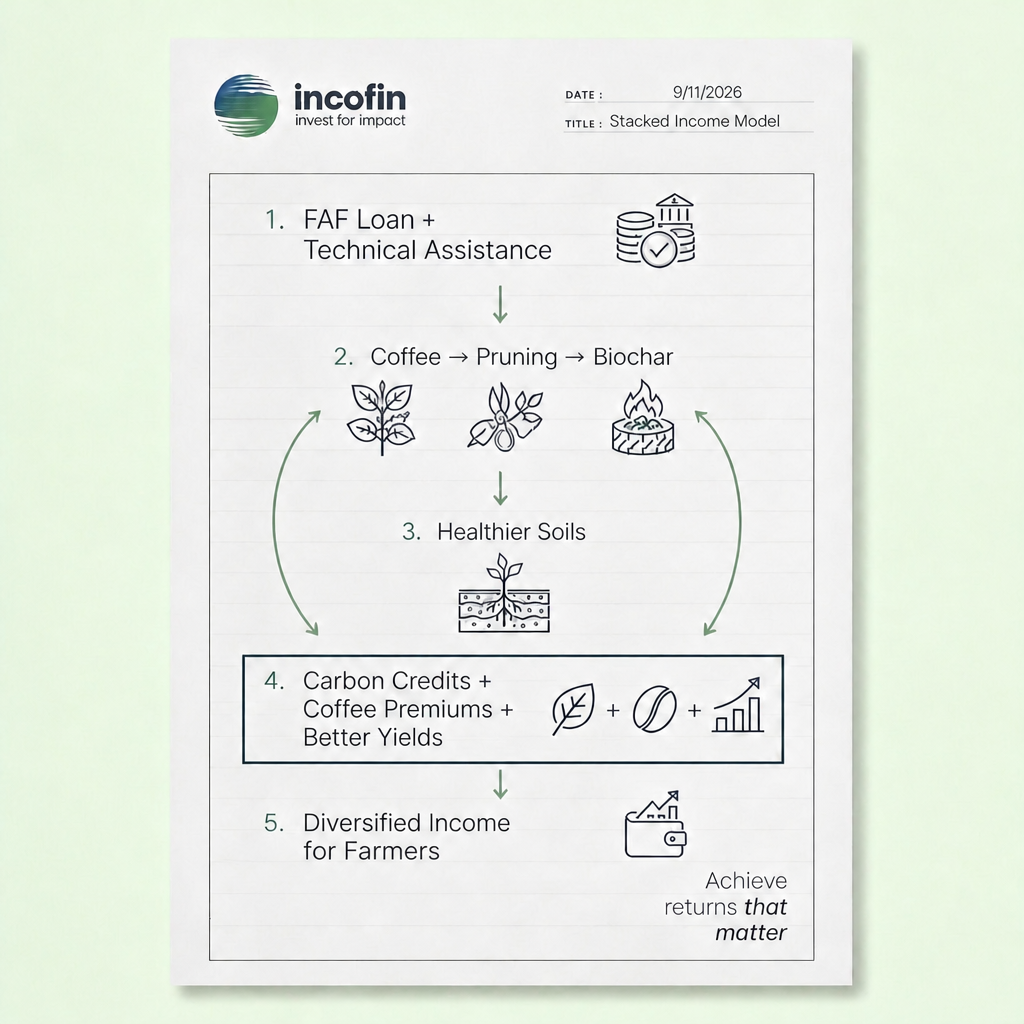
Rather than relying on a single source of income, the model combines financing, technical assistance, carbon markets and market incentives to create multiple revenue streams for smallholder farmers. This is known as a stacked-income model.
The approach was recognised in the 2026 UNCCD working paper Financing Land: Transformative Pathways to Resilient Futures as a case study on financing land restoration.
How the model works
Financing the transition
Through the Fairtrade Access Fund (FAF) and its Technical Assistance Facility, financing in this case supports:
- Biochar production infrastructure
- Farmer organisation and training
- Measurement, Reporting and Verification (MRV) systems needed to generate carbon credits
These investments help farmers adopt land restoration practices that would otherwise be difficult to finance.
Turning agricultural waste into an asset
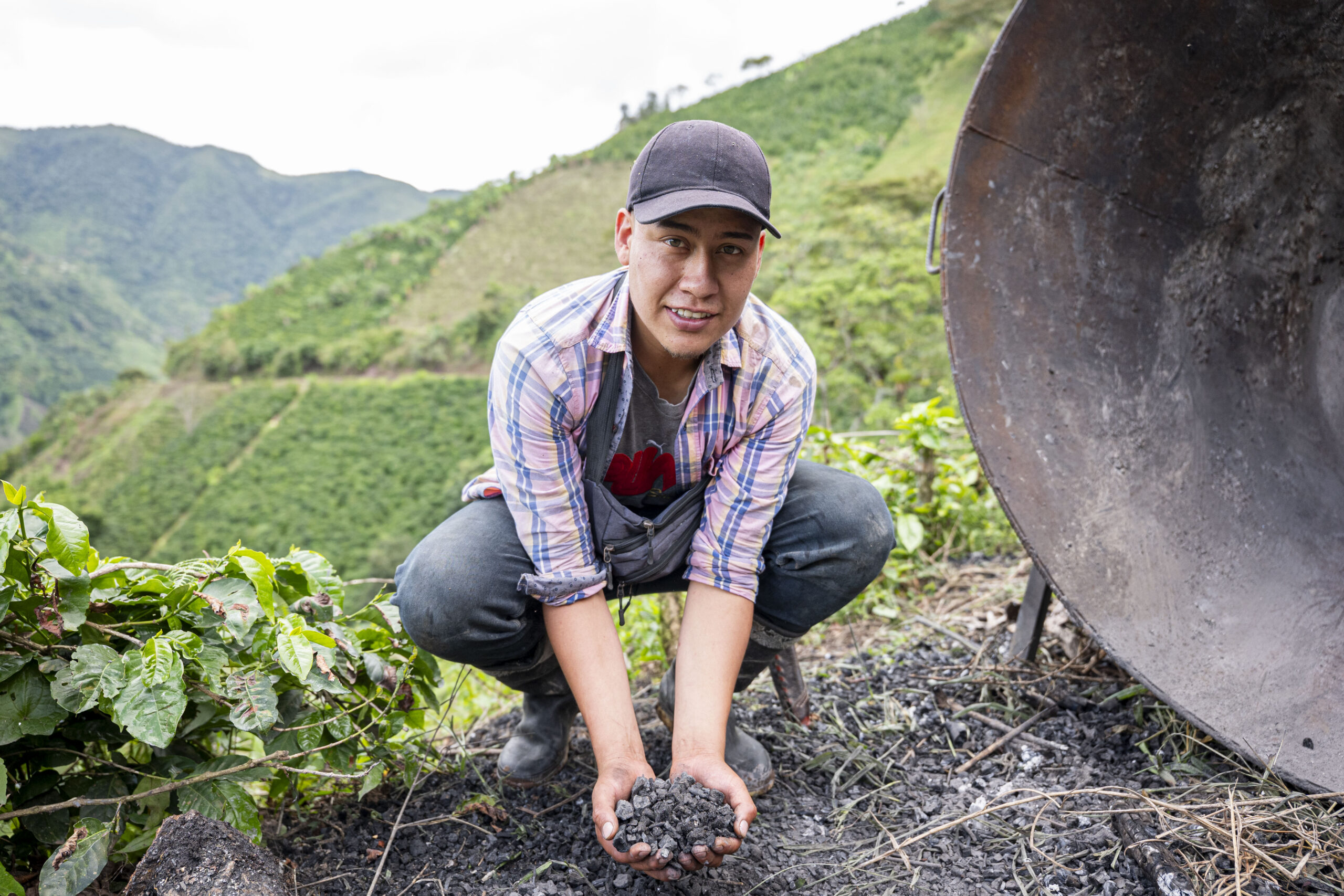
Coffee pruning residues are converted into biochar using low-cost Kon-Tiki ovens.
Biochar is a carbon-rich material that:
- Improves soil health
- Stores carbon in the soil
- Helps reduce greenhouse gas emissions
Importantly, the model uses existing agricultural biomass and does not require additional land.
Creating multiple income streams
The model generates value from several sources:
- Carbon removal credits – Farmers can benefit from revenues generated through verified biochar carbon removal credits.
- Climate-positive coffee premiums – Participating farmers can access market premiums linked to sustainable production.
- Improved productivity – Healthier soils are expected to contribute to higher yields over time.
Together, these revenue streams create a stronger business case for land restoration.
The potential impact
For each production cluster:
- Around 80-100 farming households participate
- Approximately 2,750 tonnes of biomass are processed
- Around 618 tonnes of biochar are produced
- Roughly 1,361 tonnes of CO₂ are removed from the atmosphere
By 2030, the initiative aims to:
- Apply 12,300 tonnes of biochar
- Remove 25,000 tonnes of CO₂
The case study notes that carbon-credit revenues could increase annual household income by 8-10%, alongside additional benefits from productivity gains and sustainability premiums.
Why this matters
Many land restoration projects depend on grants or temporary incentives.
CompensACTION is exploring whether land restoration can become economically attractive for farmers by linking environmental outcomes to market-based revenue streams.
If successful, the model could help demonstrate how climate finance can support both ecosystem restoration and rural livelihoods at scale.
Recognition by UNCCD
CompensACTION was featured as Case Study 7: Financing land restoration through a stacked-income model in coffee landscapes – Colombia in the UNCCD working paper Financing Land: Transformative Pathways to Resilient Futures, produced under the Global Land Outlook 3 process.